Reinventing the Game. Valeriya Gogunskaya, Founder of Chess Her
How would you introduce yourself beyond the titles and accomplishments? Who is Valeriya Gogunskaya at her core?
A woman passionate about life in all its forms. A wanderer who finds purpose in bringing people together in inspiring environments and through meaningful experiences. I strongly believe that everyone has the potential to build a life around the things they love, and on their own terms.
You’ve built businesses, communities, and now a new identity around chess. If you had to describe this chapter of your life in one sentence, what would it be?
“Nature does not hurry, yet everything is accomplished.”
This would be my motto for this stage of my life: creating at a rhythm and intensity that works for me, and trusting the process.
Entrepreneurship often looks strategic from the outside. What does it feel like from within — especially during moments of reinvention?
I feel like entrepreneurship often becomes strategic over time, but at the start of a new chapter I usually dance among chaos, exhilaration, and overwhelm. There are so many ideas and directions one could take on, all sprinkled with a sense of urgency, that it can be hard to stick to one line or one direction. I try to stay guided by the quote from the previous question.
What I find difficult is intentionally overlooking imperfections for the sake of moving forward: better done than perfect. When we are just starting, the room for improvement is gigantic — almost bottomless — so the challenge is to acknowledge it without becoming paralysed.
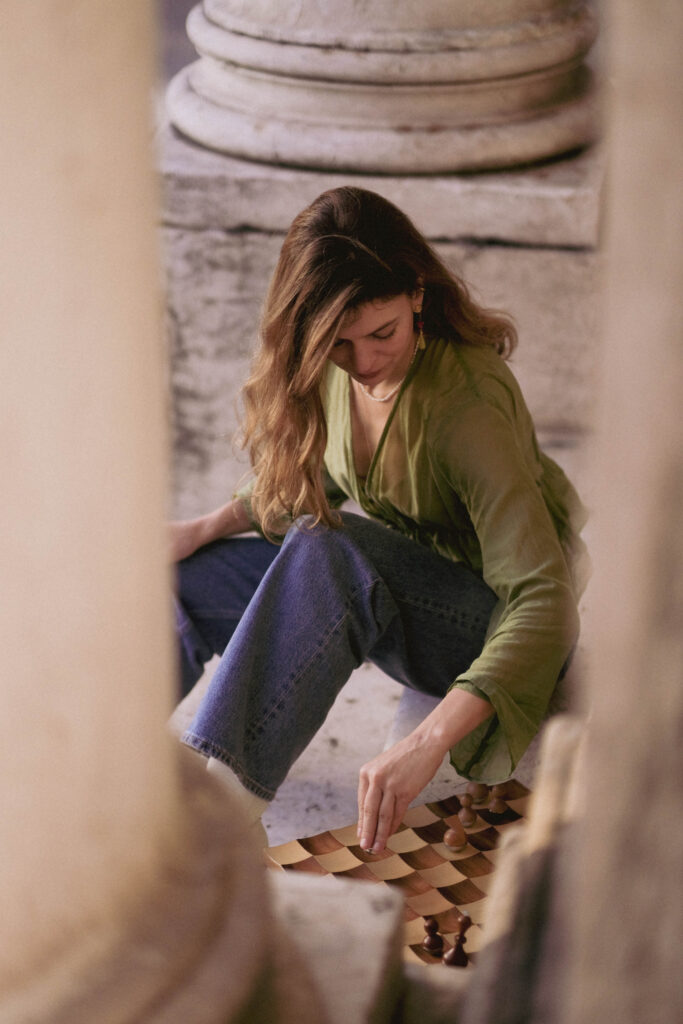
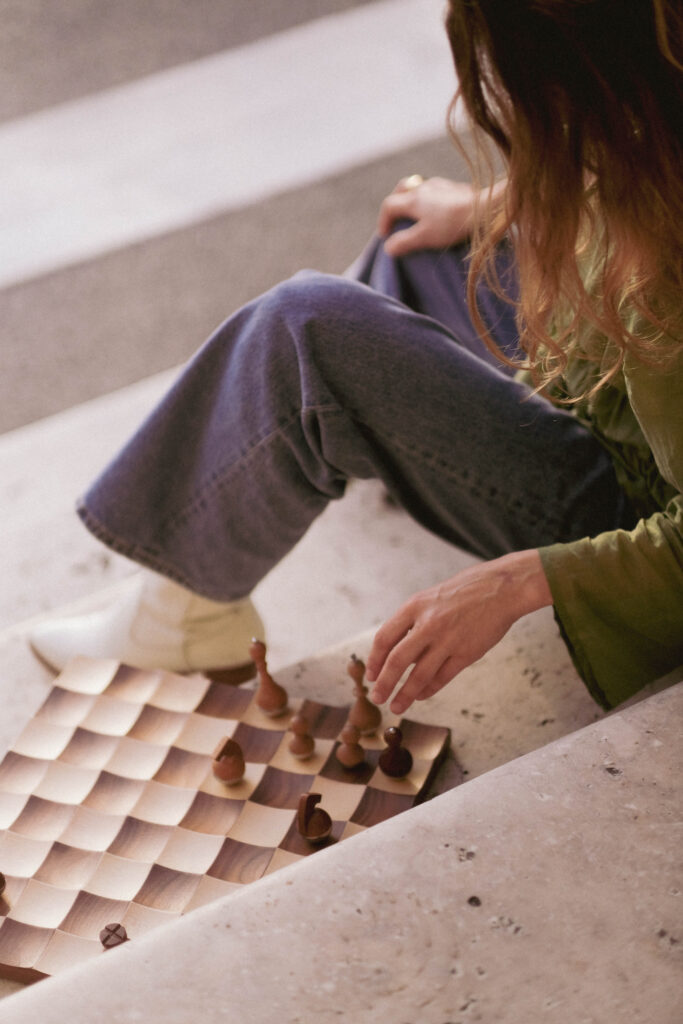
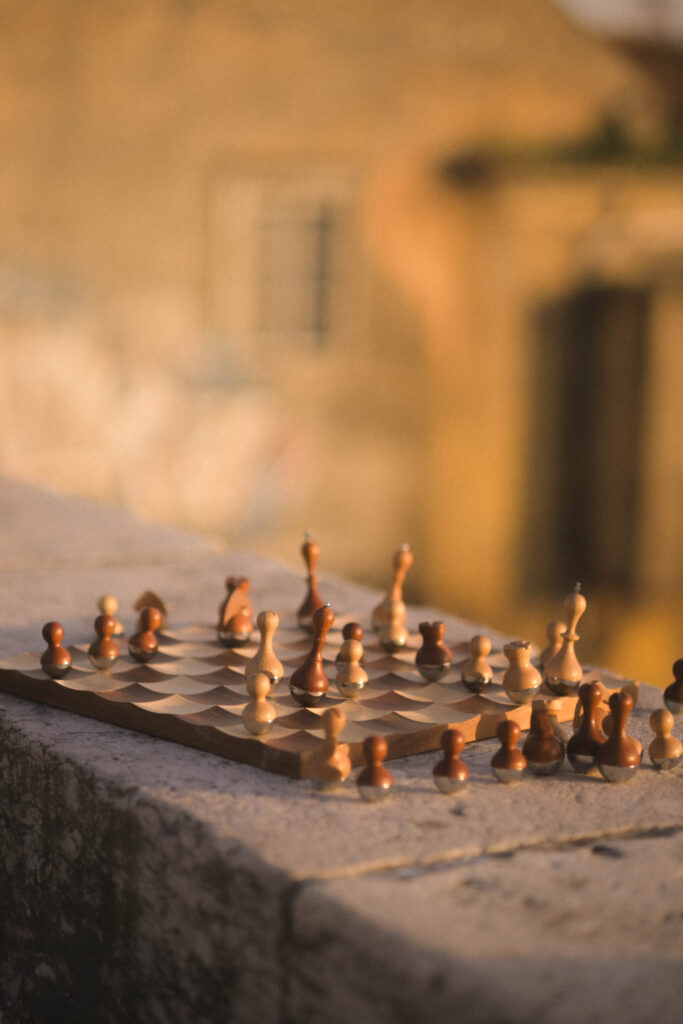
A good example from Chess Her: I would have loved to have premium, handcrafted chess boards from the very first event, because aesthetics is one of the core values of the brand. But since I couldn’t afford to spend several thousand euros on that at the beginning, I simply worked with what I could find. Yes, these boards are not exactly what I had saved on my Pinterest boards — but with them I managed to host four events in one month, which brings me much closer to my vision than simply staring at inspiration images and sighing.
Chess offers a fascinating playground to explore what it means to be a woman beyond clichés.
Was there a specific moment when you realised chess was not just a passion, but something you wanted to build around?
When it started occupying so much of my time and headspace that I simply didn’t have a choice. And also when I felt that something was missing for me personally in the chess events and communities I was attending.
Many women hesitate to redefine themselves publicly. What gave you the confidence to do so?
You know how people say, “Wherever you travel, you always take yourself with you,” implying that you cannot escape your baggage?
But my baggage doesn’t consist only of insecurities, difficulties, and shortcomings. It also contains years of experience, my strengths, my resilience, and my unique way of doing things.
I relied on these when I moved to Portugal, started my first business, and built my social media presence. And I will continue relying on them.
Reinventing myself publicly does add pressure. I sometimes worry about looking foolish, being rejected, or failing. But at the same time, it brings tremendous support and valuable feedback.
I genuinely believe that most people mean us well and want to see us succeed. Of course, there is also jealousy, and sometimes people project their own struggles onto you, which can be painful and alienating. But even that can become a resource for growth.
What has success come to mean at this stage of your journey? Has that definition evolved from earlier in your career?
In my twenties, I wanted to be cool — with all the social attributes of success.
In my thirties, I want to be myself and build my reality from that place.
Success today means allowing myself to be ordinary: sleeping eight or nine hours, belonging to a community and a greater cause, being on good terms with myself, having time for hobbies and for meaningless sitting on the sofa. And, of course, having some cash.
We often worry about the cost of change while forgetting the price of inaction.
In your experience, how important is delegation in order to remain creative and visionary? What shifted for you when you learned to trust others with execution?
I wouldn’t say it’s important — it’s paramount.
Delegation is, of course, about freeing your time so that you have space and energy to create, lead, and transform. When the person at the helm spends most of their time answering emails or shipping orders, the project survives but it doesn’t truly blossom.
But delegation is not only about gaining time. It is also about expanding your project through others. Growth happens through collaboration.
When we invite more people in, they bring their own vision of the world, their skill sets, and their unique touch. No matter how talented you are as a founder, you remain limited as a human being. Collaborators add layers, volume, and colour.
I also don’t believe in the “nobody can do it better than me” mentality. It isn’t humble — and it’s not accurate. As a business owner, you do a bit of everything, but specialists dedicate forty hours a week to their craft. It’s unrealistic to believe you can outperform them.
The real challenge is finding the right person. But that is another story.
Lastly, we grow through relationships. It can sometimes feel easier not to delegate, because then the only person you have to deal with is yourself. But building a strong professional relationship requires ongoing care — just like any meaningful human connection.
If you were to describe the brand you’re building in three words, what would they be — and why?
Fiery. Pleasure-filled. Aesthetic.
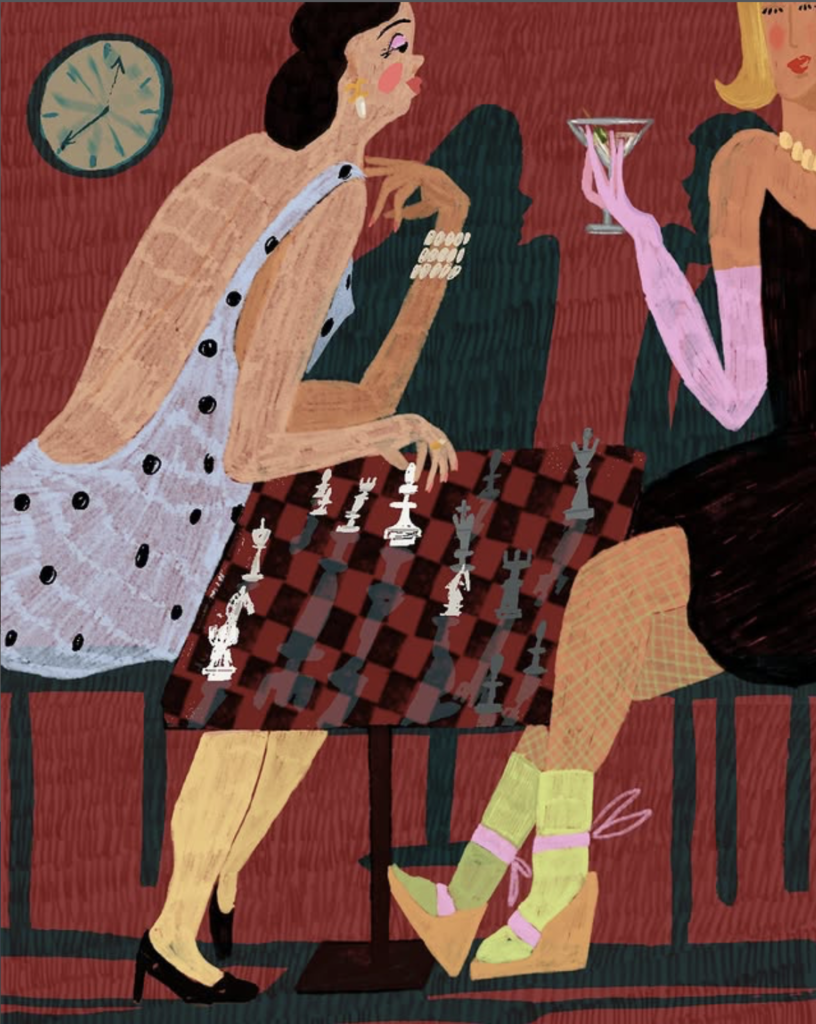
Women are often uncomfortable showing their fiery, bold, and competitive side. With Chess Her, I want to celebrate it while creating a safe and encouraging space where women can learn and play.
Then there is beauty — the beauty of the game, the beauty of a woman, the beauty of this world. Life would feel empty without it.
And finally, pleasure. I truly believe women blossom through pleasure.
We often worry about the cost of change while forgetting the price of inaction.
What kind of conversations do you hope your work around chess will spark?
Because chess is still a male-dominated space — around 85% of players are men — it offers a fascinating playground for women to explore what it means to be a woman beyond clichés and societal expectations.
Chess is also incredibly rich in metaphors. Its complexity allows us to reflect on how we approach life itself.
And finally, in a society obsessed with optimisation — which ironically keeps us glued to our screens — chess offers something rare: quality offline time and genuine focus. An added bonus is that it’s also incredibly accessible.
What would you say to a woman who feels ready for a new identity but is afraid to claim it?
We often worry about the cost of change, while forgetting the price of inaction.
The odds of us being here, on this planet, are so ridiculously small. It would be a shame to waste that chance by playing small and safe.
What question do you wish people asked you more often at this stage of your journey?
You asked great questions. ♥