
The Garment Has the Final Say. Viviane Chen on Conserving the Clothes That Outlive Us
A year in the French Alps, a musical about Louis XIV, and a lifetime of asking what a garment can safely take. From her studio in Taipei and her new home in Lisbon, Viviane Chen talks about the detective work of textile conservation, the lives stitched into a hem, and why she now asks museums to look beyond Europe. She sat down with us for a Coffee Talk.
Who is Viviane, with no institutions named?
I was born and raised in Taiwan, have lived in seven countries across different continents, and somehow ended up calling Lisbon home. I’m very independent, occasionally mistaken for stubborn, curious enough to be a little nosy, and a bit of a control freak when it comes to keeping things in order.
I’m a tropical girl at heart. I love colour, sunshine and, slightly obsessively, pineapples. I have a Latin soul too, as Brazil has my heart, and I’m endlessly curious about African textiles, music and dance. I’m quite old-school about dressing up for an occasion, simply because I enjoy it. And I take my work far too seriously. The rest of the time, I promise, I’m much more fun.

The first garment you fell for, and who was wearing it.
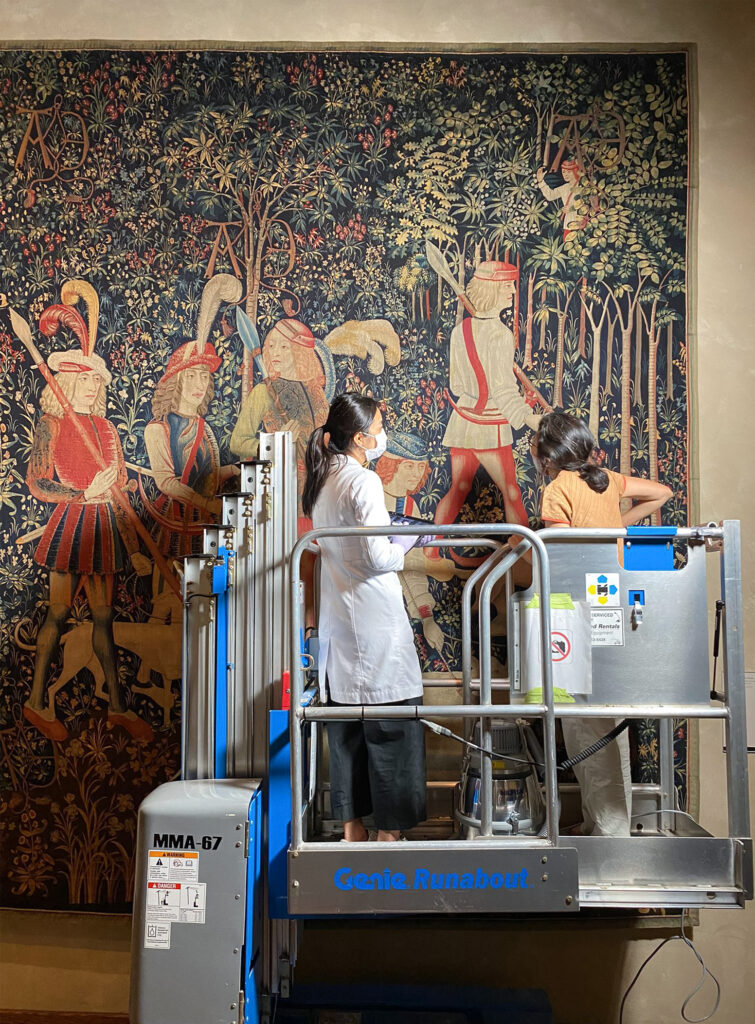
Louis XIV in his coronation robes and red heels.
What did you have to travel far to learn, and what did coming home give you?
It actually started in 2006, when I was still at high school. I left Taiwan for the French Alps and spent a year studying and living with French families in a small Alpine valley. One of my host families took me to see Le Roi Soleil, the musical about Louis XIV, and I was completely fascinated: the costumes, the history, the palace sets, all of it. I had no idea then, but that evening probably started everything.
London became my main base for many years. I trained in historical costume making, spent time in Dresden on an Erasmus exchange, and went on to make European historical dress for film, theatre and museum exhibitions. Somewhere along the way, I discovered textile conservation.
Throughout my twenties and early thirties, I kept finding excuses to live in different countries for a few months at a time, usually for work or study. Brazil probably changed me the most. It made me realise how little I actually knew about the world, and introduced me to a mix of Portuguese, African and Indigenous histories that was completely new to me. It was also where I first became curious about Portugal, which, rather unexpectedly, eventually led me here.
Then the pandemic brought me back to Taiwan. After so many years away, I started seeing my own culture differently, and recognising what I already had at home: family and professional networks, local suppliers, the language, and simply knowing how things work. So I built my first textile conservation studio there.
Today, my years of experience in Europe and my base in Taiwan work together naturally. Going forward, the Taiwan studio will also serve as a base and point of contact for European projects working in East Asia.
I left Taiwan because I fell in love with European historical dress, and now I’m using much of what I learnt there to ask museums to look beyond Europe.
What does success mean to you now?
Earlier in my career, I probably measured success by the projects I worked on and the places I worked with. That has changed. Now, success is much more about whether I can use my experience to contribute something meaningful to the field.
One thing I care deeply about now is how non-European fashion is represented in museums. Much of it is still presented through a very European filter, sometimes rooted in ways of thinking that go back to nineteenth-century colonial museum practices. I want to be part of changing that, and to help garments tell their own histories more authentically.
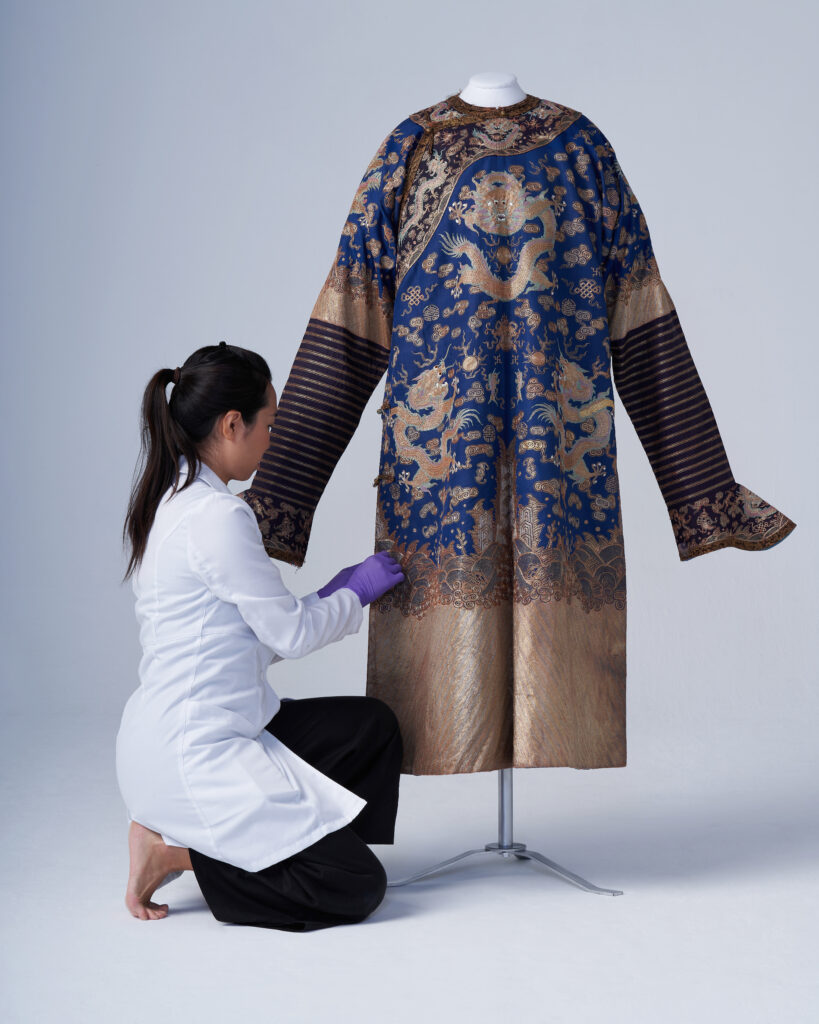
Alongside my other work, I’ve recently had more opportunities to work with East Asian dress collections. Through conservation and mounting, I can rethink how a garment is presented: its silhouette, how it sits on the body, even what we choose to emphasise. These might seem like small decisions, but they can completely change how we understand the garment and its story.
There’s a certain irony in all this. I left Taiwan because I fell in love with European historical dress, and now I’m using much of what I learnt there to ask museums to look beyond Europe. To me, being in a position where my work can contribute to that change is a much better measure of success.
The first hour with a fragile piece. What do you look for before anything is touched?
I often say that being a conservator is a little like being a doctor, except that my patients are usually a hundred years old and can’t tell me where it hurts. For me, conservation sits somewhere between science and history. I need the science to understand what is happening physically to an object, and I need its history to understand what should, and shouldn’t, be changed.
Before I touch anything, I need to understand the purpose. Is the object going into an exhibition? Is the priority long-term preservation? Is it being prepared for sale? Then comes the health check. I look at the fibres, the construction, weak areas, previous interventions, signs of wear and alterations, anything that helps me build a picture of the object’s life.
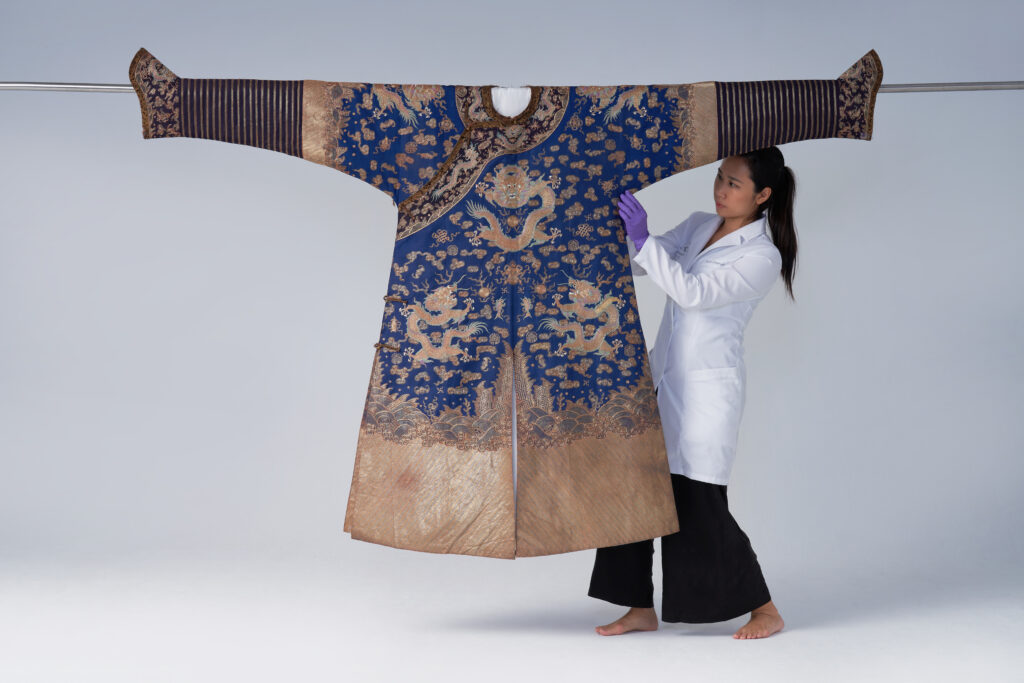
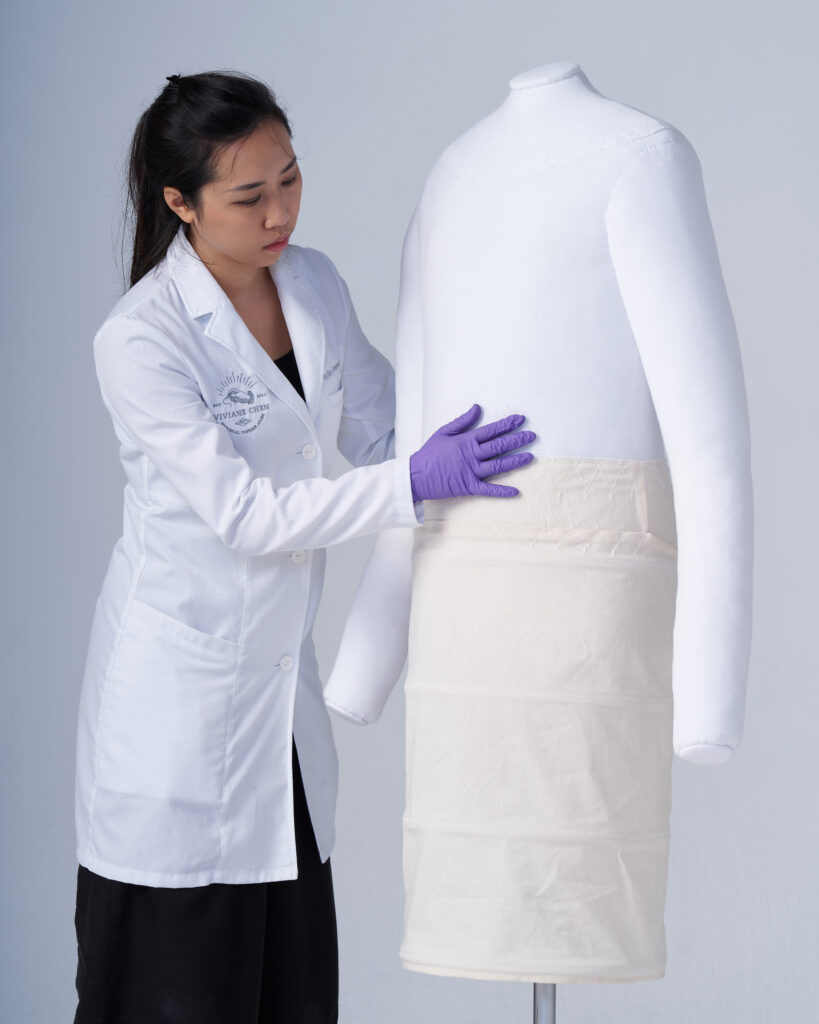
At the Chen Chung-Ho Memorial Hall, I was both curator and conservator for the gallery. The collection tells the story of Chen Chung-Ho and his family, one of Taiwan’s five wealthiest families around the turn of the twentieth century. One of the pieces was a Qing dynasty tabard that belonged to his wife. It was extremely fragile, so although I had a curatorial vision for how it would be presented, the garment still had the final say. Instead of asking, “How can I make this look better?”, I had to ask, “How much can it safely take?” That shaped both the treatment and how I eventually supported and displayed it.
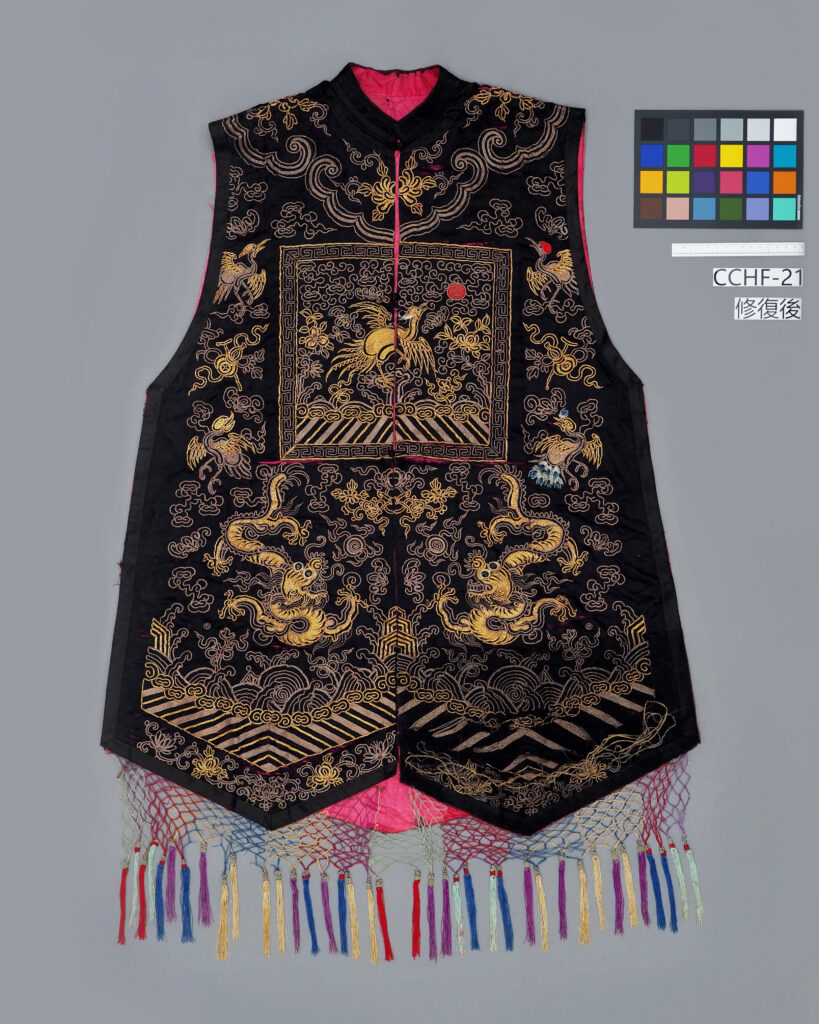
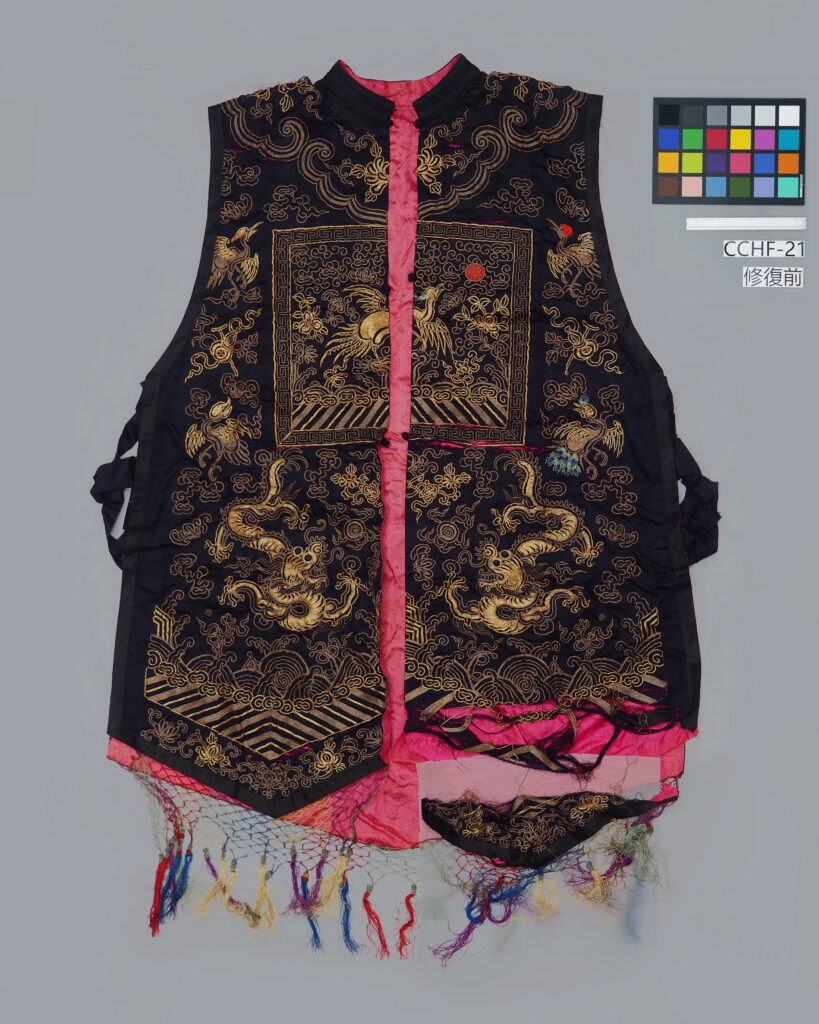
There’s always an invisible line between conserving or restoring something and changing too much of it. Should every stain disappear simply because I can remove it? Not necessarily. Age, wear and previous interventions are part of an object’s history too. Whatever I do, I need to understand and manage the risks, and any intervention must be reversible, or at least never stop a future conservator from treating the object again. What I do today becomes part of its history as well. No pressure.
Most of the objects I work with will never be worn or used again, so I’m not conserving them for next Tuesday. I’m thinking about the next hundred or two hundred years, hopefully much longer, so that people in the future can still connect with the people and the time they came from.
Only after all that do I decide on the treatment: whether the garment is strong enough to be displayed, for how long, and what support it needs. Then I discuss the plan with whoever is responsible for the collection. So the first hour is mostly looking, thinking and asking questions. The needle comes much later.
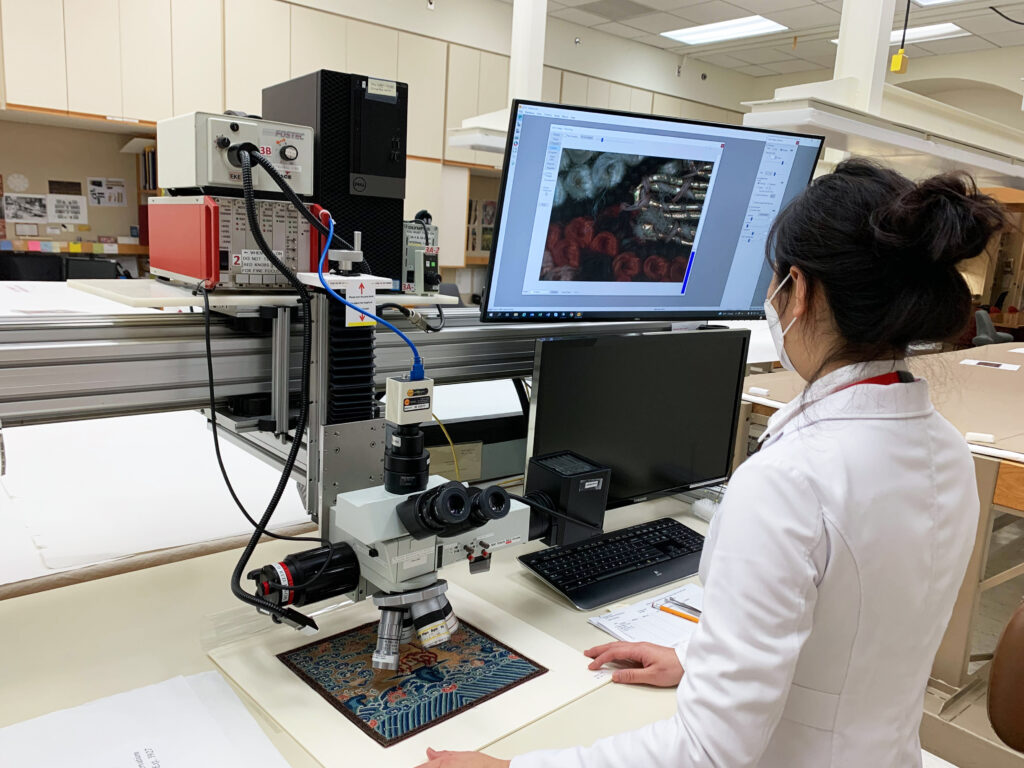
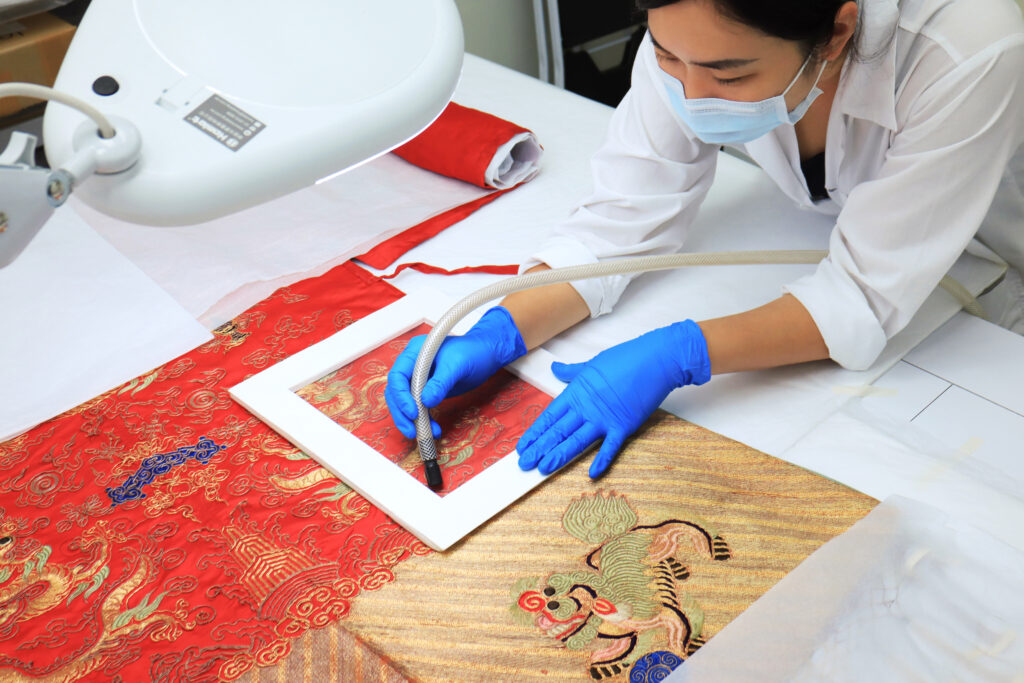
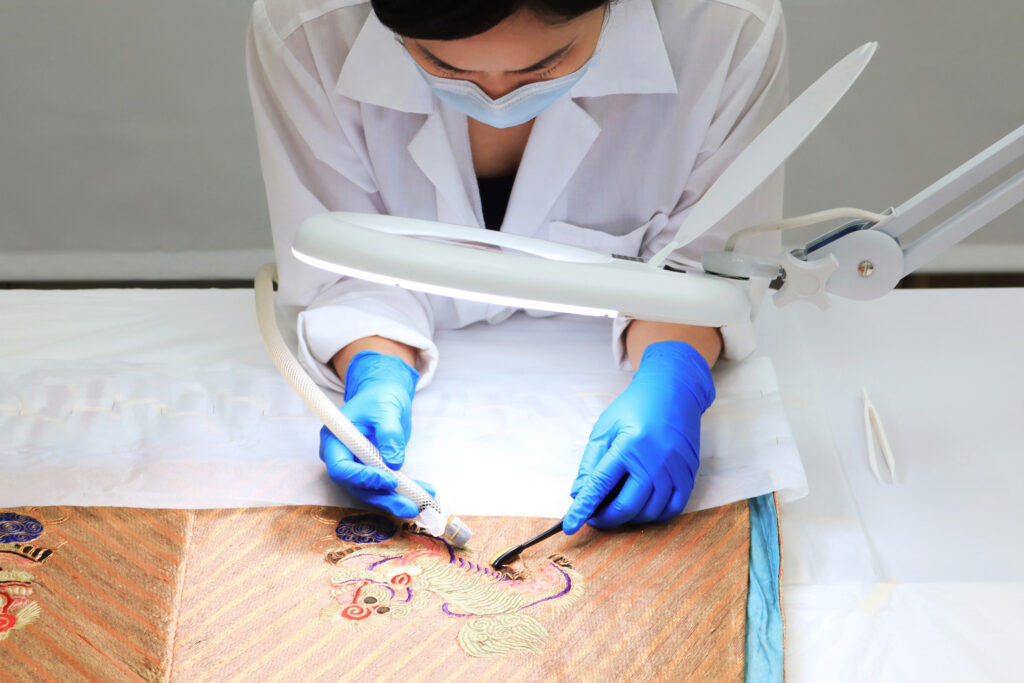
My patients are usually a hundred years old and can’t tell me where it hurts.
Has a garment ever told you something about its owner that no archive recorded?
All the time. We’re often given very little information about an object, so part of my job is to let the garment itself fill in the gaps.
I’ve always thought garments are among the most intimate objects you can work with, because they once sat directly on someone’s body. How something was altered, worn and cared for can tell you things that were never written down: a waist taken in, a hem raised, repeated wear, even traces of smoke that make you wonder whether the wearer smoked.
And sometimes there was more than one wearer. A garment might have been passed down, altered to fit another body or updated for a different time, so you start to see several lives layered into one piece.
That’s what fascinates me. The written archive might give you the biography, but the garment can get you much closer to the person.
The written archive might give you the biography, but the garment can get you much closer to the person.
Which women have shaped the way you see cloth?
Jenny Tiramani is the first person who comes to mind. What really influenced me was how she studies historical dress: by going back to the original garments and combining history, science and practical making skills, rather than simply reading about them.
She showed me that a garment can tell you how people dressed, and something about the society they lived in. It completely changed the way I look at clothes.
What is on your worktable this autumn, and what is it teaching you?
At the moment I have a seventeenth-century Portuguese teliz on my worktable, which is essentially an elaborate horse blanket. It’s quite a change from the clothes I usually work with. I spend so much time thinking about how textiles relate to the human body, and now my client has four legs.
Since making Portugal home, I’ve been spending more time learning about its history and traditions through objects. This teliz is taking me into a completely new subject, horse textiles and Portuguese equestrian culture, which I knew very little about before.
What question do you wish people asked you more often?
I wish people asked more often, “So what does a textile conservator actually do?”
It’s still a little-known profession, and I’d love people to be more curious about what happens behind the scenes. Repairing old clothes is only the visible part. There’s history, science, research, practical skill and quite a lot of detective work involved, sometimes all for one tiny stitch.
I think people would be surprised by how much thought goes into something they may never notice. And that’s often the point: if I’ve done my job well, you shouldn’t notice me at all.
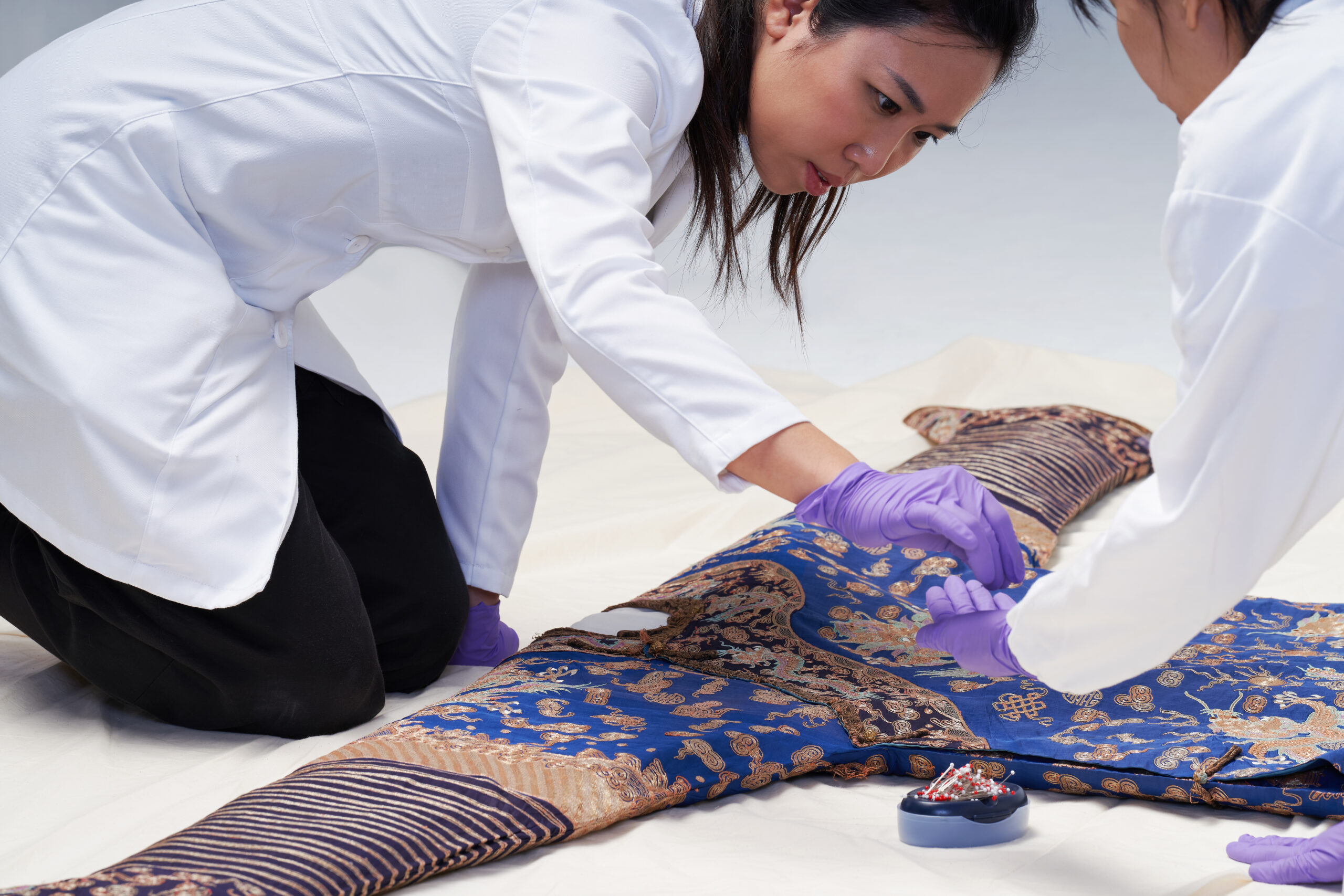
The first hour is mostly looking, thinking and asking questions. The needle comes much later.