

A Letter to the Ernest Leoty Woman.
By Eleonore Bonneau Diemoz
I don’t think you’re searching for more.
Not more success, or more speed, or more ways to prove that you’re doing things well. I think you’re searching for alignment — for the moment when the different parts of your life stop pulling in opposite directions, when ambition and care no longer feel like competing forces, and when what you wear, how you work, and how you live begin to speak the same language.
The Ernest Leoty woman has always existed in this space.
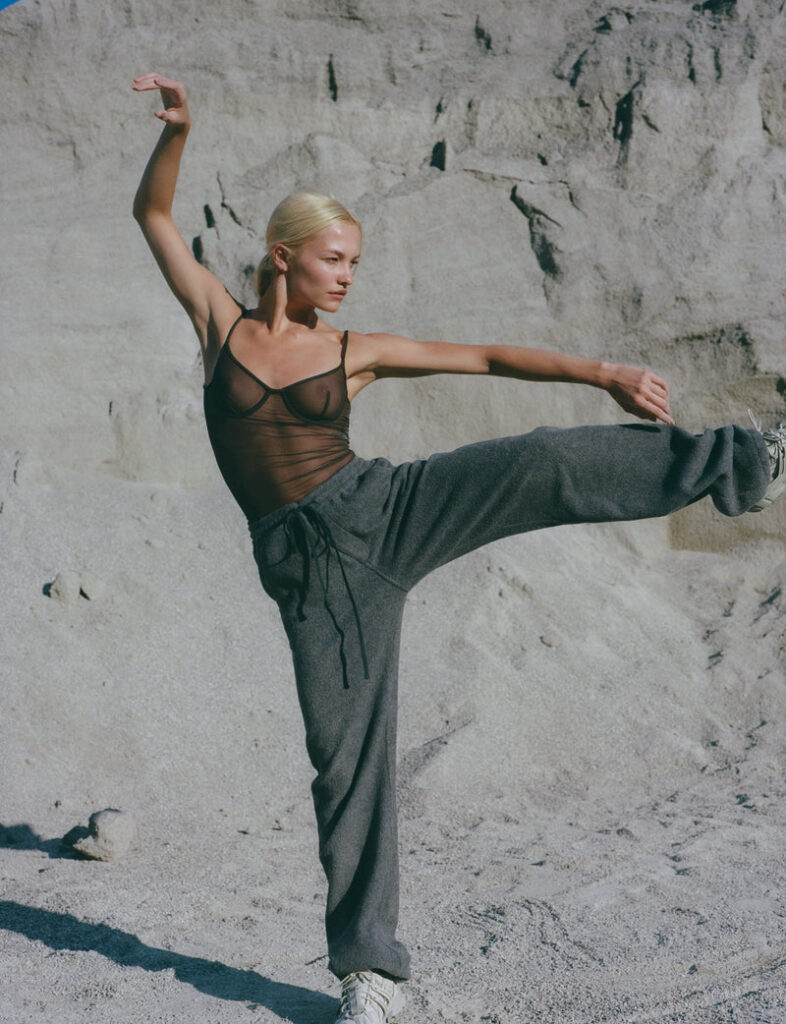

She was there at the very beginning, in Paris, when a corset maker chose elasticity over constraint — when structure was reimagined not as restriction, but as support. The gesture was radical in its simplicity: to allow the body to breathe, to move, to exist without apology. That decision still echoes today, not only in clothing, but in a way of inhabiting life.
Because this has never been only about garments.
It is about the relationship a woman has with form and freedom, with discipline and ease. About choosing precision without rigidity, elegance without stiffness. About understanding that comfort is not the absence of intention, but the result of intelligence.
For a long time, I believed movement meant forward motion only — progress measured in expansion, growth, and momentum. I lived inside demanding systems where intensity was rewarded and endurance was expected. I learned a great deal there: rigor, excellence, commitment. But life has a way of interrupting even the most carefully constructed rhythm.
Health does that.
Motherhood does that.
Time, inevitably, does that.
What followed was not a revelation, but a negotiation — between the desire to remain fully engaged in my work and the need to remain present in my own life; between freedom and the quiet longing for stability; between movement and pause.


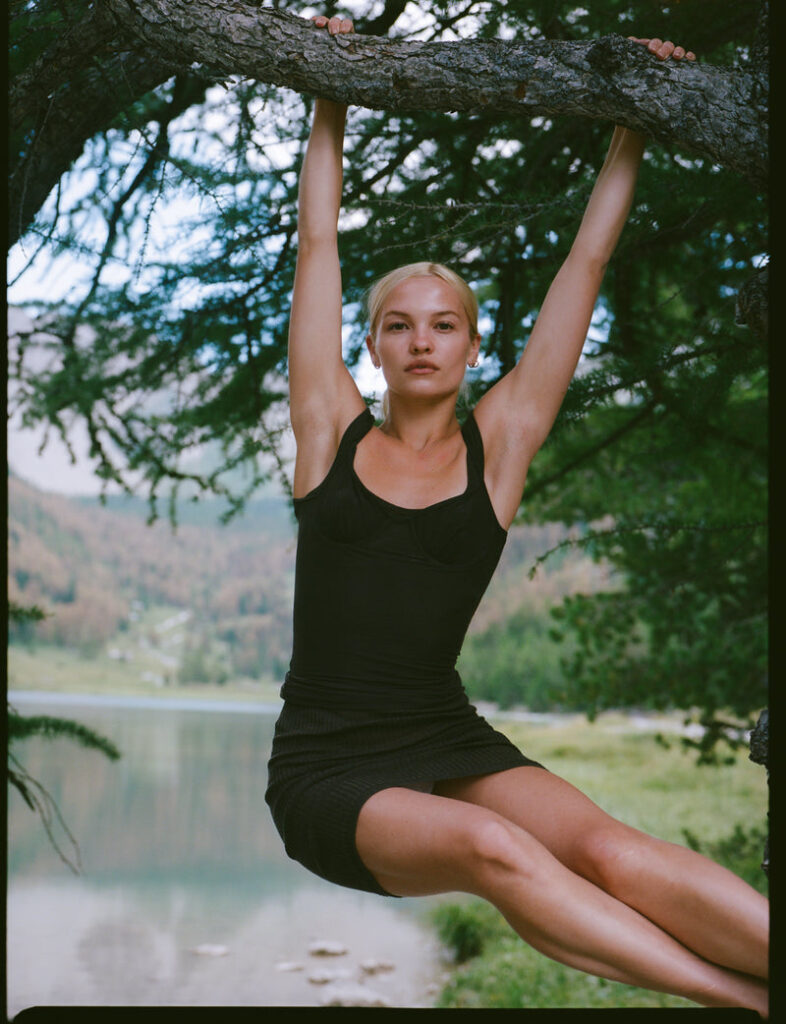
It was then that I understood alignment is not something you arrive at. It is something you practice.
The Ernest Leoty woman understands this intuitively. She does not dress for transformation, but for continuity. She moves through her day without needing to change who she is from one hour to the next. Her clothes accompany her — from work to life, from effort to rest — without asking her to perform or adjust.
Elegance, in this sense, is coherence.
There are days, of course, when nothing aligns. Days when the questions return, uninvited and persistent. Am I doing enough? Am I choosing well? Am I present in the places that matter most?
I no longer try to silence these questions. I let them sit beside me. They remind me that choice is both a privilege and a weight — that freedom, while beautiful, can also feel unanchored. Sometimes what we seek is not openness, but direction. A sense of track beneath our feet.
Stability does not have to mean stagnation. It can be a container — one that allows movement to last.
This is the legacy I recognise in Ernest Leoty, and the woman it continues to dress. A woman who values depth over display, alignment over accumulation, and who understands that the body is not something to discipline into submission, but something to listen to.

If you are reading this and feel suspended between versions of yourself, know that you don’t need to resolve the tension. You only need to stay attentive to it.
Alignment is rarely loud. It reveals itself quietly, through honest adjustments, through choices that make room for breath.
And perhaps the simplest, most demanding question to return to — again and again — is this one:
Are you happy, not always, not ideally, but here?
This, at least, is how the Ernest Leoty woman learns to move through the world.
Eleonore Bonneau Diemoz